

- LSESU Economics Society Essay Competition
Respond to LSE professors' prompts in 1,500 words
Open to high-school students worldwide and free to enter. Five topics are set by current LSE Economics professors; outstanding essays receive dual-signed certification from an LSE professor and the Society.
- Eligible grades
- Grades 9–12High school students worldwide · Individual
- Format
- Online submissionFree · One essay per person
- Language / Word count
- EnglishUp to 1,500 words, excluding references
- Deadline
- 1 Sep 2026 · Closed
- Results
- Watch for email notification
Nine years of excellence, globally recognised
Since 2017, the Essay Competition has become a highly regarded high-school economics writing event in the UK.
Overview
The LSE Economics Essay Competition is officially organised by the LSE Economics Society for outstanding high-school students. All topics are set by current LSE Economics professors and faculty members. Past setters include 2010 Nobel laureate Professor Sir Christopher Pissarides, former President of the Royal Economic Society Professor Sir Tim Besley, and LSE Honorary Professor Sir Richard Layard.
Participants take on a genuine university-level economics challenge and engage with frontier theory and real-world issues. Outstanding essays earn dual-signed certification from an LSE professor and the Society. A strong performance in the competition serves as powerful academic evidence for students applying to economics-related programmes.
LSE Economics Society
LSE's largest and most influential academic society, and the only society officially supported by the LSE Economics Department.
Nobel-calibre professors
100 points across seven criteria, with topics set and entries judged by current LSE professors.
Cambridge Economics Camp
Top winners are eligible for the St Catharine's College Cambridge Economics Camp for outstanding high-school students worldwide. Learn more →
Prestigious endorsement
The highest-level certificate is co-signed by the setting professor and LSESU Economics Society
Topic-Setting Professors and Essay Topics
The topics for the LSESU Economics Society Essay Competition are exclusively set and developed by core professors of the LSE Economics Department. The themes consistently focus on cutting-edge real-world economic issues or the innovative application of classical theories, to foster students' capabilities in independent research, critical analysis and innovative thinking. The scoring criteria are also formulated in full alignment with the academic standards of university-level economics essays. Participants are required to demonstrate accurate understanding of economic theories, sound use of supporting evidence, and competent critical analysis skills.
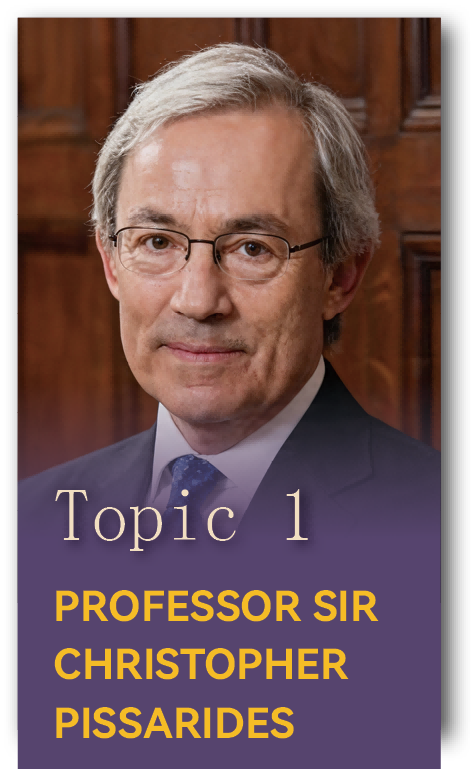
REGIUS PROFESSOR OF ECONOMICS AT LSE
- Winner of the 2010 Nobel Prize in Economic Sciences
- Fellow of the Econometric Society
- Fellow of the British Academy
- Member of the Academia Europaea
- Knighted in 2013
- Lifetime Honorary Member of the American Economic Association
- Conferred the Grand Cross of the Order of Merit of the Republic of Cyprus in 2011
- Served as President of the European Economic Association in 2011
Representative Work: Equilibrium Unemployment Theory: A Canonical and Authoritative Reference in the Economics of Unemployment.
● TECHNOLOGY & WORKER WELLBEING
Evidence shows that workers like to work from home, say one day a week, but they hate monitoring devices that the firm might use to see how they allocate their time during the home day. What do you think the firm should do, if it wants to motivate its workers by giving them something that they like, but at the same time ensure it gets its money’s worth during working hours?

PROFESSOR OF ECONOMICS AT LSE
- A.W. Phillips Professor of Economics
- Fellow of the British Academy
- Fellow of the Academia de Ciências de Lisboa
- 2017 Banque de France/Toulouse School of Economics Junior Prize
- 2021 Yrjö Jahnsson Award (the biennial highest European honour in economics)
- 2017 Banque de France/Toulouse School of Economics Junior Prize
- Distinguished Scholar at the Bank of Canada
- Fellow of the Econometric Society
- 2022 Carl Menger Prize
- Former Editor of the Journal of Monetary Economics
- Serves as an advisor to several central banks, including the Bank of England, Sveriges Riksbank, Federal Reserve Bank of Richmond, and the European Stability Mechanism.
Selected Publications: Central Bank Swap Lines: Evidence on the Effects of the Lender of Last Resort;Debt Revenue and the Sustainability of Public Debt.
● ENERGY & ECONOMICS
Following a sharp rise in UK energy prices, prepare a brief for a central bank on how monetary policy should respond. Take into account that the UK is a net importer of energy, and that the Bank of England has a mandate of keeping inflation steady at 2%.
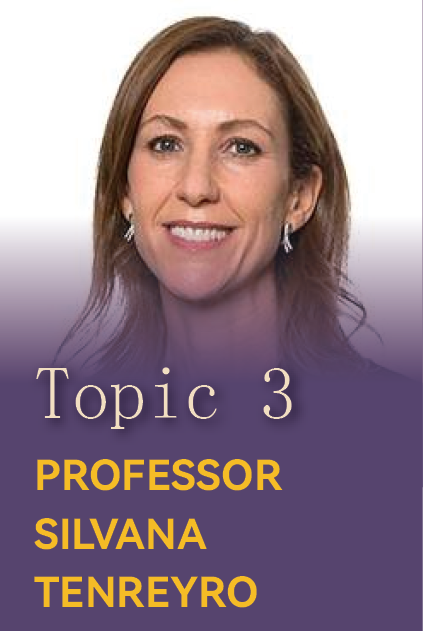
PROFESSOR OF ECONOMICS AT LSE
- Fellow of the British Academy and the Econometric Society
- Fellow of the Econometric Society
- Former Director of the International Macroeconomics and Finance Programme, Centre for Economic Policy Research (CEPR)
- Former President of the European Economic Association
- Commander of the Order of the British Empire (CBE)
- 2021 Yrjö Jahnsson Award (the highest European honour in economics)
Selected Publications: Dollar Dominance and the Transmission of Monetary Policy; Trade Fragmentation, Inflationary Pressures and Monetary Policy.
● AI & EMPLOYMENT
Suppose AI reduces the number of people needed to perform a large fraction of jobs, threatening to cause high unemployment. What measures should be put in place to limit inequality in pay (and, ideally, also in hours worked)?
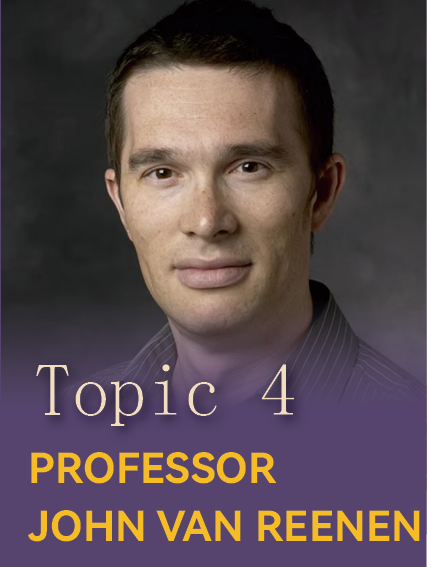
PROFESSOR OF ECONOMICS AT LSE
- Officer of the Order of the British Empire (OBE)
- 2009 Yrjö Jahnsson Award
- Fellow of the British Academy (FBA)
- Fellow of the Econometric Society
- Former Associate Editor of the American Economic Review, Quarterly Journal of Economics, and Econometrica
Selected Publications: The International Empirics of Management; Opening up Military Innovation: Causal Effects of Reforms to U.S. Defense Research.
● TAXATION & FAIRNESS
Is it possible and desirable to raise taxation on the top 1%?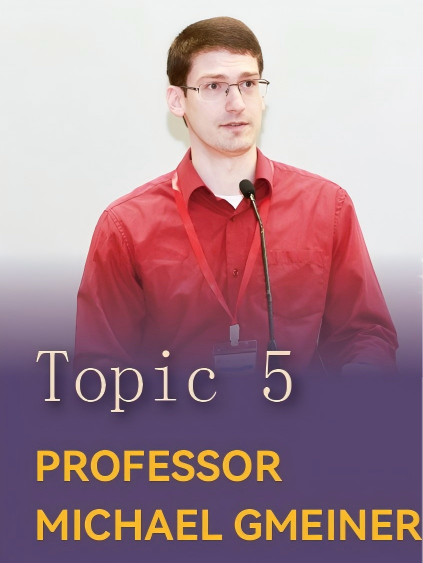
ASSISTANT PROFESSOR OF ECONOMICS AT LSE
- Ph.D. in Economics, Northwestern University
- Deputy Undergraduate Programme Director
Selected Publications:
• Comparing the cost of cirrhosis to other common chronic diseases: A longitudinal study in a large national insurance database.
• Can patterns of household purchases predict the outcome of US presidential elections?
• Qualitative, rather than quantitative, differences between HLA-DQ alleles affect HLA-DQ immunogenicity in organ transplantation.
● GREEN TECHNOLOGY
How will development and adoption of climate-friendly technologies affect inequality and the distribution of wealth?Process and timeline
Choose a topic
Pick one of the five topics. Choose the one you can support with the strongest evidence, not the one that looks most authoritative.
Write your essay
Up to 1,500 words, Times New Roman 12pt, 1.5 line spacing, Harvard referencing. AI-generated content is not allowed.
Submit on time
Submit through the official channel. File name format: NAME+QUESTION X.
Await results
Results are expected by email in November 2026 — please check your inbox.
Judging criteria, awards, and eligibility
| Criterion | Points | Description |
|---|---|---|
| Argument and originality | 25 | Clear argument, consistent logic, original insight beyond textbook answers |
| Use of economic theory | 20 | Accurate and effective use of relevant economic models, frameworks, or concepts |
| Evidence and examples | 15 | Supported by empirical research, historical cases, and credible data |
| Critical analysis | 15 | Discussion of opposing views, trade-offs, limitations, or alternative explanations |
| Structure and clarity | 10 | Clear structure, logical flow, effective introduction and conclusion |
| Referencing and sources | 10 | High-quality sources with consistent citation style |
| Relevance | 5 | Stays on topic and answers the question directly |
| Award | Share / places | Benefits |
|---|---|---|
| High Distinction | Top 5–10% | Certificate signed by the President of LSESU Economics Society; eligibility for the Cambridge Economics Camp Learn about the camp → |
| Prompt Podium | 3 per essay prompt | Certificate signed by LSESU Economics Society and adjudicating professor for each essay prompt |
| Prompt Winner | 1 per essay prompt | Certificate signed by LSESU Economics Society and adjudicating professor for each essay prompt, and additional £50 money prize |
| Overall Winner | 1 winner across all entries | Certificate signed by LSESU Economics Society and adjudicating professor for each essay prompt, and additional £100 money prize |
| LSE Offer-holder Winner | 1 winner out of LSE offer holders | Certificate signed by LSESU Economics Society and the LSE’s Head of Department of Economics, and a £100 money prize |
* Only winning students receive certificates; Participation certificates are not available.
Past winning essays
Published essays are shared with authors' consent for academic exchange only.
Example Winning Entry 1:
Who Owns the Green Transition?The Triple Asymmetry of Low-Carbon Capital (2026 Question 5 GREEN TECHNOLOGY)
View SubmissionExample Winning Entry 2:
AI, Displacement, and Inequality: A Practical Policy Response (2026 Question 3 AI & EMPLOYMENT)
View SubmissionRegister to get academic materials and the annual essay collection early
Registration is completely free and not required—you can submit an essay for free without registering. Once registered, you can download the full academic materials, judging rubric guide, and annual winning-essay collection for preparation.
Submission and results
Submission rules and links
In English, up to 1,500 words (excluding references); Times New Roman 12pt, 1.5 line spacing, page numbers; Harvard referencing; choose one of five topics, one submission per topic; file name format NAME+QUESTION X; AI-generated content and plagiarism are prohibited and lead to disqualification.
Check 2026 season results
Enter the name and email you used to submit.